


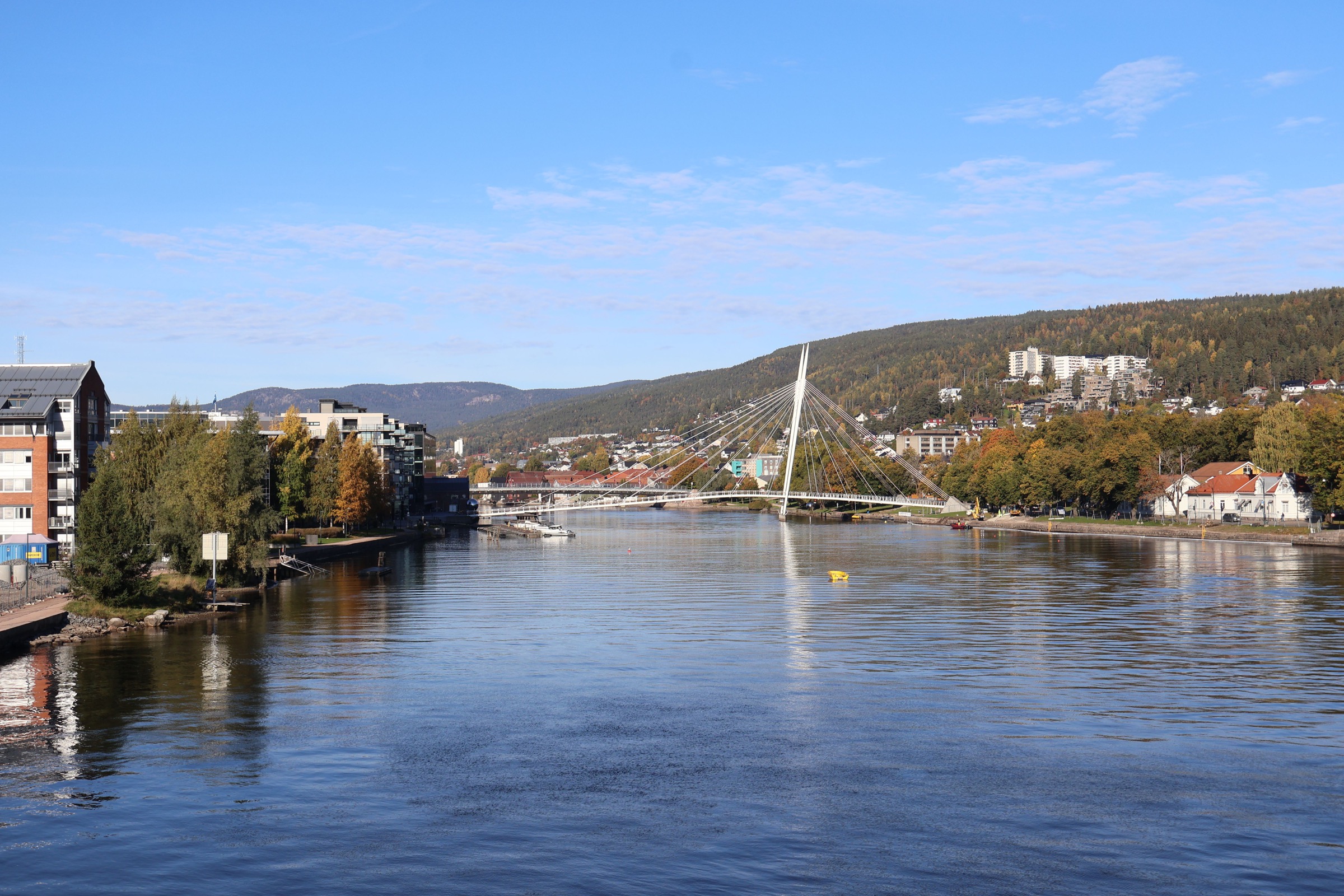
Small and midsize businesses need reliable networks and secure systems, often with fewer people and tighter budgets. When Nordma began operating in Drammen in 2026, our aim was to bring them the expertise we gained in large Norwegian and international organisations, with work scoped and priced for smaller teams.
From preparation to the first assignment
We registered Nordma in October 2025 and spent the rest of the year preparing to start operations. In 2026, founder and principal consultant Michał Ambroziak took on Nordma’s first client assignment. That was the point when the preparation became client work. It also made our approach tangible: the person discussing the problem with the client was the same person responsible for the technical decisions and the work itself.
Nordma works across networking, cybersecurity, infrastructure and governance. Those areas meet in ordinary decisions. A Wi-Fi upgrade, for example, affects who can connect and how guests are separated from staff. A firewall change needs someone to approve it, a maintenance window and a record of what was done. Our role is to work through those dependencies with the people who run the business and help carry the agreed changes through.
The experience behind Nordma
Michał has worked in network engineering since 2007. His early roles included network operations at Alcatel-Lucent in Poland and technical support at Cisco in Norway for customers and partners across Europe, the Middle East and Africa. That combination gave him two perspectives: how to diagnose problems while a service is running and how to design a network that will be easier to support later.
At PGS, Michał was responsible for global onshore and offshore network infrastructure. The work included a Wi-Fi migration across offices and vessels. Equipment choices were only one part of the job. The old network had to be understood, the change had to be sequenced across different sites, and people still needed connectivity during the transition. A smaller company moving one office can apply the same discipline on a much smaller scale: inventory the equipment, confirm who and what depends on it, test the new set-up and agree what happens if the change needs to be reversed.
During his time at NetNordic, Michał worked as a solution architect and technical consultant on the migration of networks at more than 40 NorgesGruppen warehouse locations. A rollout on that scale benefits from a repeatable plan and room to accommodate differences between sites. The lesson applies when a business adds its second or third location. Agree which parts of the network should be standard, document the exceptions, and use that record as a starting point when the next site opens.
His later consulting work included network design and delivery for Equinor and Northern Lights, as well as infrastructure operations and development for the Norwegian Environment Agency. Design, implementation, upgrades and documentation all formed part of that work. The practical lesson is to plan for the people who will operate a solution after delivery. They need to know what changed, how to check that it is working, and who can help if a problem comes up.
Senior expertise at a scale smaller businesses can use
Many small businesses have similar responsibilities to larger organisations. Someone still needs to keep the network available, manage access and recover when a service fails. In a smaller team, those duties often fall to a few people who are also responsible for other parts of the business. A project needs to fit their available time, their budget and their ability to look after the result.
That shapes how we approach pricing. Start with the problem, agree a scope and identify which part needs specialist time. If the immediate issue is unreliable Wi-Fi, a first engagement could establish where coverage or capacity falls short and what can be improved with equipment the business already owns. That gives the client a basis for deciding whether to adjust the existing set-up or budget for a replacement.
The same applies to security. A business might start by finding out who can administer its systems, what happens when someone leaves, and which recovery procedures have actually been tested. Those checks can help set priorities and decide where a specialist or a new tool will make a difference. Work can then be split into stages, with a cost and an outcome agreed for each stage.
Technology partners that add specialist capability
Nordma’s technology partners help us bring specific capabilities into a project when they fit the customer’s requirements. We look at the systems the business already uses, how many people or locations the solution must support, and who will operate it. A recommendation should be tied to a defined problem and a plan for maintaining it.
Fortinet supports network security projects that involve firewalls, secure connections between sites and control of access at the network edge.
AVSystem provides Linkyfi, a platform for managing guest Wi-Fi. It can give a venue control over how guests connect and tools for understanding how that service is used.
CodeTwo provides tools for Microsoft 365 and Exchange, including centrally managed email signatures, migration software, backup for Microsoft 365 and one-click email surveys.
ColdByte provides a security agent for Microsoft 365 that helps teams monitor their environment, review findings and approve remediation.
NACVIEW provides network access control for wired and wireless networks. It helps organisations check which users and devices can connect and apply the access policies they choose.
For example, a venue may need both Fortinet and Linkyfi if it wants to manage guest connections while keeping its business systems separate. A company reviewing Microsoft 365 may need to understand its security configuration, migration requirements or recovery options. In either case, the starting point is how the business uses its systems and how responsibilities will be divided once the work is complete.
How a first engagement can work
A first conversation can begin with one question: what are you trying to make more reliable, more secure or easier to run? We discuss who uses the system, what is already in place and how much change the business can accommodate. From there we can agree what needs investigating, what a successful outcome looks like and which decisions the client wants to retain.
For a defined project, that might mean reviewing a network, recommending a design, making agreed changes and writing up what was done. For an existing IT team, it might mean bringing in a specialist for a migration or a technical decision. For ongoing work, scope and escalation paths help everyone know who is responsible when something needs attention.
By the time a project is handed over, the client should be able to explain what changed and why, find the relevant documentation, and know who to contact about the next step. Bringing that level of care to a problem that a smaller team can afford to solve is the reason Nordma began operating.